Why trust your business to us?
We take the panic out of procurement. We stock millions of hard-to-find parts from our trusted sources. We refresh our product listings by minutes, and online purchases are completed in real-time and shipped every day.
Founded in 2002, Instockin is a local leader in electronic components distribution , and is also recognized as one of the most respected and innovative companies in the local market today. Headquartered in Hong Kong, Instockin has earned an impressive reputation for providing outstanding service and developing efficient, comprehensive global supply chain solutions.
Learn More >
FR3 FEM Real Challenge: Not Circuit Design, But Heterogeneous Integration
As frequency bands move into the 7–24GHz range, system complexity no longer stems from individual devices. Instead, antenna design, advanced packaging, and cross-domain system collaboration have become the key variables defining performance limits.
Reviewing technical reports on the 6G FR3 band, a clear watershed emerges: the communications industry is shifting from frequency band competition to system capability competition.
In the 5G era, debates centered on whether Sub‑6GHz was sufficient or whether millimeter‑wave could scale. For 6G, the conversation has fundamentally changed. The FR3 band, spanning 7–24GHz, has moved to center stage not because it is perfect, but because it is the only realistic choice balancing bandwidth, coverage, and cost. Yet this balance concentrates nearly all system challenges into one architecture.
The deeper insight grows clearer: the real difficulty of FR3 has never been the frequency itself, but the full architectural reconstruction from antenna to RF front‑end to system design. As antenna counts rise, spectrum fragments, and power and thermal limits tighten, the traditional approach of discrete components and modular assembly is reaching its breaking point.
This is no longer a matter of adding more PAs or swapping filters. The entire wireless system must be redesigned from the ground up. That is the core message of the report.
Core Message
The 6G FR3 band (7–24GHz) achieves high‑capacity wireless communication and user equipment deployment through heterogeneous integration spanning from antenna to RF front‑end.
FR3: The Balanced Band for 6G Performance & Cost
FR3 occupies the middle ground between Sub‑6GHz (FR1) and millimeter‑wave (FR2), with unique strategic value:
- Wider bandwidth than FR1, supporting higher data rates
- Better propagation than FR2, lowering deployment cost
- Enables massive MIMO for scalable capacity
FR3 is essential for 6G to deliver both high capacity and realistic deployability.
Core Conflicts: Fragmented Spectrum & Exploding System Complexity
FR3 brings severe system‑level challenges:
- Discontinuous bands and global spectrum fragmentation
- Coexistence of cellular, WiFi, and satellite systems
- High‑order modulation and massive MIMO demanding extreme linearity and power
- Extreme antenna space constraints in mobile devices
Richer spectrum means higher complexity, forcing a full RF architecture rebuild.
Key Path: FEM Evolution from Discrete to System-Level Integration
The report identifies FEM (Front-End Module) restructuring as the core solution for FR3, with two architectural directions:
1. FR1-like architecture (without beamforming)
– Simple structure, easy integration
– Low gain, high insertion loss
2. FR2-like architecture (with beamforming)
– Higher system gain (≈+3dB)
– Higher efficiency and lower power consumption
– Larger area and higher design complexity
FR3 is evolving from low‑frequency thinking toward millimeter‑wave system design.
The Real Bottleneck: Antenna, Packaging & System Co-Optimization
The report emphasizes a critical judgment: FR3 success depends on antenna and system integration, not individual device performance.
Antenna integration as the top bottleneck
Metal frame, back cover, under-display solutions
Antenna sharing across FR1/FR2/FR3 becomes essential
Emerging AiD (Antenna-in-Display) technologies
Connection and insertion loss
Path loss from antenna to FEM: 0.5–3 dB
Directly impacts PA design and system power budget
Thermal management pressure
PA junction temperature approaches 100°C
Heat dissipation becomes a system-level constraint
RF systems have evolved from pure circuit design to multi‑disciplinary engineering involving structure, materials, and thermal dynamics.
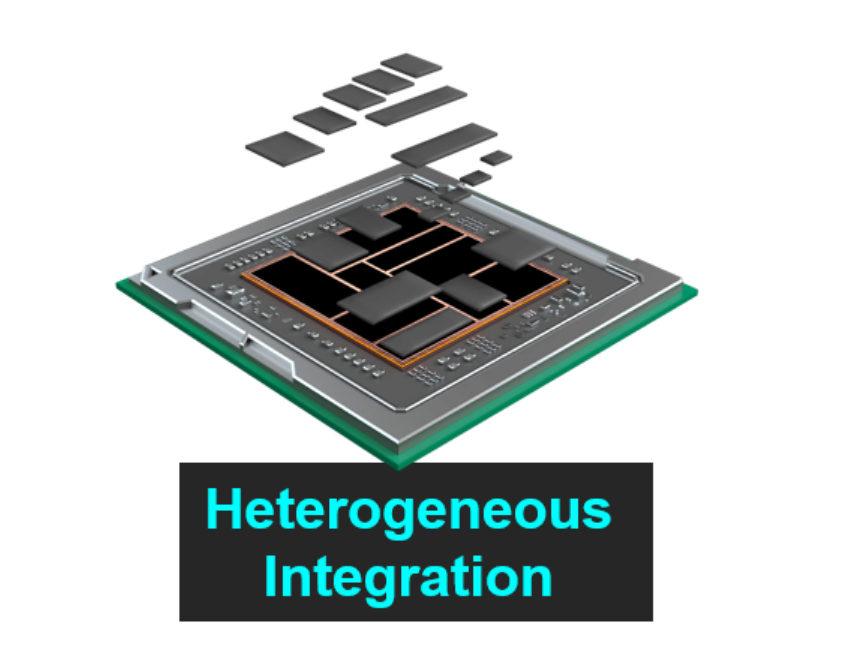
Final Solution: Heterogeneous Integration
To resolve these challenges, the report points to heterogeneous integration as the only viable path.
It spans the entire system:
- Active devices: PA, LNA, beamformer
- Passive devices: acoustic filters, IPDs
- Material platforms: GaAs, GaN, CMOS, SiGe
Key industry trends:
- GaN-on-Si: balancing power and cost
- Single-chip FEM: higher integration
- IPD: high-Q passive integration
FR3 is not merely a frequency band issue. It represents a full-scale revolution in system-level integration.